
Teaching Philosophy
The Rowville Primary School teaching philosophy focusses on supporting the development of the whole child as they progress from Foundation to Year 6. We believe that Literacy and Numeracy skills are the gateway for future learning and that Social and Emotional skills complement these traditional fundamental skills.
Rowville Primary School has an agreed whole school instructional practice. Our curriculum is delivered through the gradual release of responsibility lesson structure which is underpinned by the latest educational research.
Our teachers observe, listen and research side by side with our students. The success criteria for every lesson are explicit. The learning intention of the lesson and the success criteria is what guides the teacher talk during the lesson. Our teachers use: elaborating, reflective, probing and clarifying questions routinely in all lessons. Students are encouraged to wonder and pose questions. There are opportunities during the lesson for critical and reflective thinking.


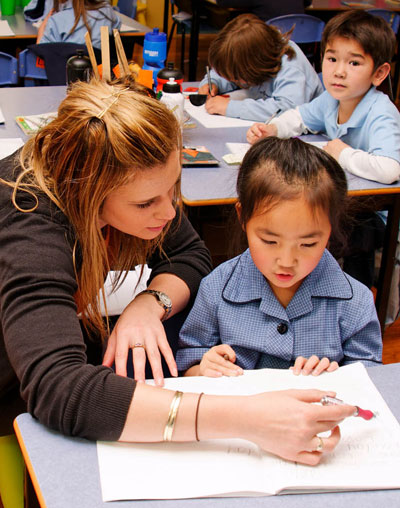


Our whole school practice involves beliefs around how classroom environments should be ordered and structured. Our classrooms across the school are organised in a way that inspires and supports our students to become lifelong learners.
Our teachers focus on the learner- their strengths, their interests, and their point of learning need. All decisions about teaching flow from this focus point. We ask: What is it we want our students to know? How will we know if our students are learning? How will we respond when students do not learn? How will we enrich and extend the learning for students who are proficient? (Du Four)
Our teachers collaborate in professional learning teams to observe and monitor our students in their learning. Students who require additional time and support or who require extension are supported through targeted strategy groups. As a result, our students are challenged to progress at their own pace, according to their own abilities.
