The Learning Journey
The Learning Journey at Rowville Primary School
Rowville Primary School provides a dynamic learning environment through agreed whole school instructional and wellbeing practices. Our physical environment is based on the Reggio Emilia philosophy that views the environment as the “third teacher”. The social and emotional curriculum is grounded in a restorative philosophy. The academic curriculum is delivered through evidence based instructional practices. Our teachers are skilled to design curriculum and not merely adopt curriculum packages.
Foundation (The First Year of School)
Embracing a Curiosity for Learning and Building a Sense of Belonging
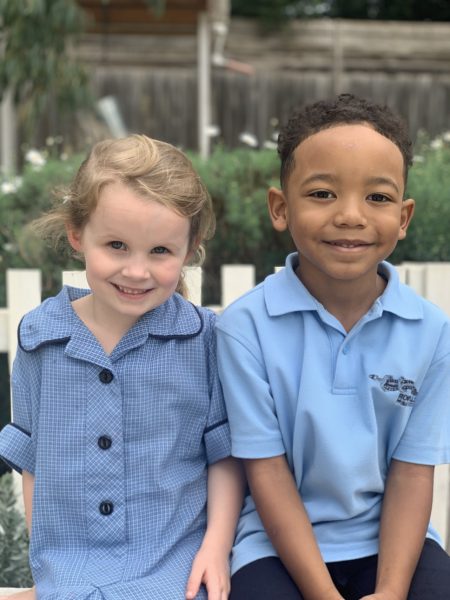
Students arrive at school curious and eager to learn. At Rowville Primary School we provide a physical learning environment and experiences that nurture this natural curiosity.
By focussing on the development of the social and emotional learner attributes of social awareness and relationship management, we foster a sense of belonging and promote positive relationships. The skills of friendship, and teamwork are integrated into the learning program. Each student is assigned a buddy from the senior school to support them in their first year of school. Our goal is for our students to feel positive about themselves and as learners. This provides the foundation that stands our students in good stead for their journey through the early years.
There is a strong emphasis on literacy and numeracy. Through explicit teaching our students are supported to learn to read and to develop a lifelong love of reading. They are supported to become authors who publish their writing and share their poetry with an audience. Concrete materials and manipulatives are used to develop their mathematical thinking and understanding.
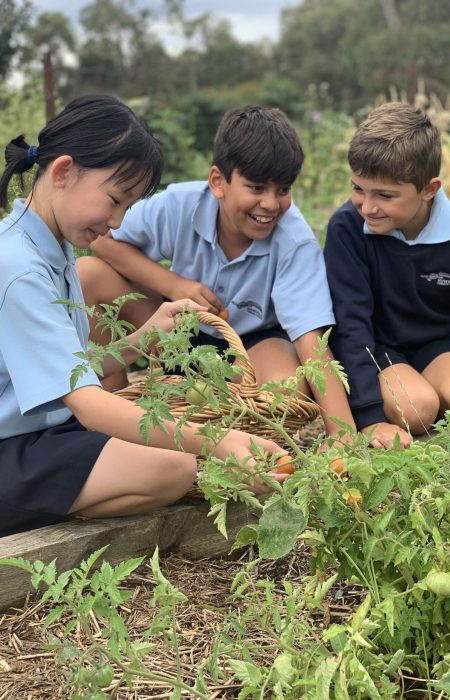
The strong specialist programs further stimulate the senses. Students participate in Visual Arts, Performing Arts, STEM, Physical Education and Italian. The ‘How the World Works’ program provokes thought and conversations. Students visit the Stephanie Alexander garden every week and participate in a range of investigations in the garden.
All students commence school with diverse skills and abilities. Our teachers seek to understand each learner and ensure that each student is appropriately supported and challenged depending on their learning needs.
In their first year at school students are supported to establish foundational skills in literacy, numeracy, social and emotional skills which will be built upon in the early years at school.
The Early Years (Year 1, Year 2)
Happy, Confident and Competent Learners
In the early years our teachers build on the foundational skills acquired in the first year of school to foster the core knowledge, skills and personal attributes that children need to become lifelong learners.
The development of social and emotional learner attributes includes a greater emphasis on self-awareness, social awareness, and self-management so that students feel more confident about themselves. This helps our young students to learn more effectively and develop strength of character and resilience.
There is a strong emphasis on literacy and numeracy. Through explicit teaching our students are supported to develop greater stamina in reading and writing. They are authors who publish their writing and share with a variety of audiences. With concrete materials and manipulatives students are becoming confident mathematicians who are developing a sound understanding of core mathematical concepts.
The strong specialist programs continue to stimulate the senses. Students participate in Visual Arts, Performing Arts, STEM, Physical Education and Italian. The ‘How the World Works’ program provokes thought and conversations. Students visit the Stephanie Alexander garden every week and participate in a range of investigations in the garden. They are starting to make hypothesis and articulate solutions to everyday problems.
Students in Years One and Two are encouraged to develop their leadership skills through various classroom roles and responsibilities.
Middle School (Year 3, Year 4)
Greater Independence and Increased Responsibility for Learning
In the middle school students develop greater levels of confidence and independence as a learner. While the explicit instruction of literacy and numeracy continues to have a strong focus, there is an increasing emphasis on the application of the growing literacy and numeracy skills.
Our students demonstrate their understanding of mathematical concepts through a range of problem-solving opportunities in the STEM Centre and the classroom and the school. They read novels and texts of increasing complexity for both enjoyment and for learning. Students apply their literacy skills when undertaking research for problems associated with their inquiry into “How the World Works”.
The teaching of social and emotional learner attributes includes a greater emphasis on relationship management. Students are supported to develop skills in managing the changing complexities of relationships with their peers.
At this stage of schooling students continue to develop independent learning skills and greater competence at setting learning goals and working toward these independently. They start to focus their inquiry in the ‘How the World Works’ program and to take ownership of their research. Teachers cater for the learning needs of individuals through focussed strategy groups. This may include additional support or extra stretch.
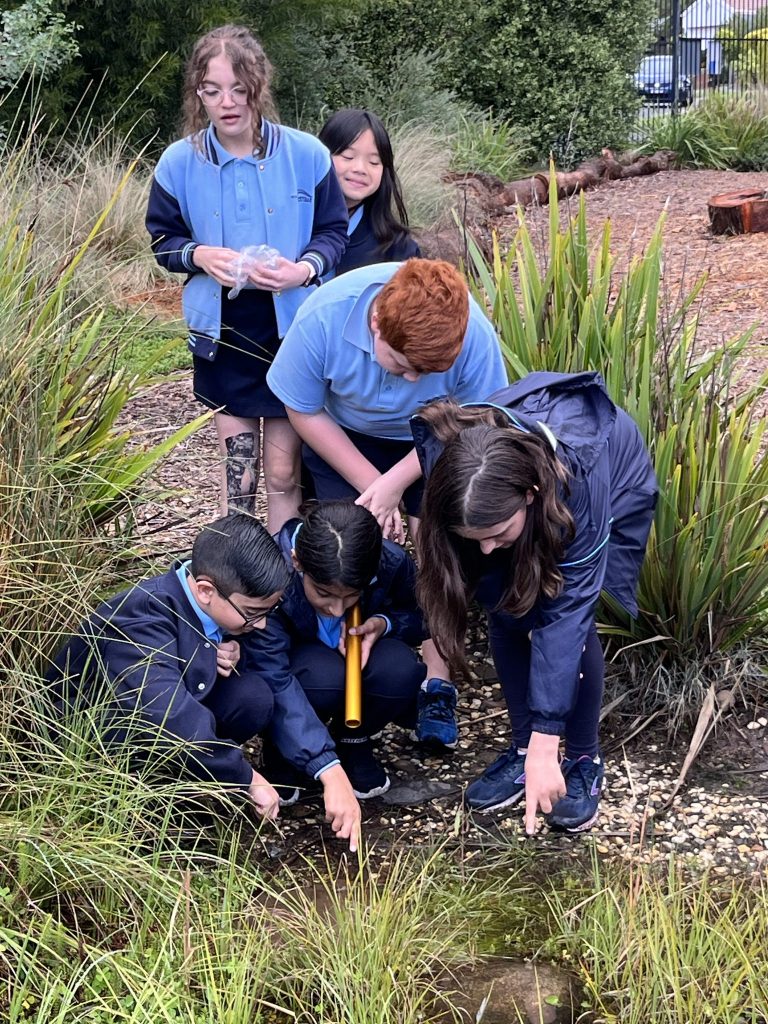
The students in the middle school participate in a comprehensive specialist program and a range of extra-curricular activities. Students participate in a range of specialist programs including Visual Arts, Performing Arts, STEM, Physical Education. They participate in the Stephanie Alexander Kitchen Program where they learn about cooking and Italian cooking culture. The Italian language program is delivered online. The ‘How the World Works’ program provokes debate and critical thinking. Students participate in the Stephanie Alexander garden every week where they focus on climate and biodiversity. They participate in an overnight Beyond Boundaries program.
Students can participate in a range of extra-curricular activities such as choir and Mathematics Talent Quest.
Digital technology is utilised to enhance learning. The students in the middle school have a one to one device and develop both their IT capability and learning about cyber safety.
Students in the middle school can develop their leadership skills through participation in the STEM parliamentary group.
Senior School (Year 5, Year 6)
Self-Directed Learners and Responsible Role Models
The focus on the final two years at primary school is to support the development of greater independence and responsibility for learning in preparation for a smooth transition into the next stage of schooling. The senior school fosters in students an ability to develop the character skills required to thrive in an ever-changing environment.
Literacy and numeracy continue to be an important focus. Students are engaged in analysing issues and applying critical and creative thinking to complex problems. Students write and read for specific and demanding audiences and purposes. They are presented with opportunities to transfer their skills in numeracy to solve real problems.
Social and emotional learning continues to be an important focus. Students are supported to adapt to physical, social and emotional changes. There is a focus on responsible decision making which includes strategies to resist peer pressure and how current choices affect future. Our senior students develop the self-management that results in them displaying grit, determination and perseverance. Social awareness skills are honed to lead to the demonstration of understanding of others point of view and perspectives.
Digital technology is integrated into teaching and learning. They integrate technology for a real purpose-to research, share and collaborate. Students have a one to one device that they can take home to continue work commenced at school. They develop initiative and self-direction in their learning. Students work collaboratively on inquiry and research investigations into “How the World Works”. This involves accessing and evaluating information and applying technology effectively. They explore challenging ideas and consider viewpoints beyond their own. Students are encouraged to be curious about the world and use critical research strategies in their wider lives.
As students develop independent learning skills our teachers monitor each student’s learning to ensure that all students are provided with the necessary support or challenge based on their specific needs.
A feature of the senior school is the extensive and comprehensive specialist subjects of Visual Art, Performing Arts, Physical Education, STEM, Stephanie Alexander kitchen program and the Stephanie Alexander kitchen program. All students participate in a major musical production. Students can participate in a range of extra-curricular activities including parliamentary working parties; as sporting captains; news reporters; interschool sport; a four day Beyond Boundaries program.
Senior students are role models to younger students and are presented with a range of mentoring opportunities